
Picture this: you’re roasting in a sauna, bathed in golden heat, your skin shimmering like bronze, and thinking, I could live here forever. Then you slip into a tub of ice water that shocks every nerve in your body. This is contrast therapy, the wellness ritual that somehow manages to be both torture and transformation.
It used to be a recovery hack reserved for Olympians. Now everyone from your yoga-obsessed coworker to your next door neighbor is in on it. In the last five years, ice baths and plunges have gone from a niche recovery hack to people now spending over $7.2 billion on sauna experiences and nearly $800 million on plunges worldwide. But, does it work? Here’s what you need to know.
What Is Contrast Therapy?
Simply put, contrast therapy is the practice of alternating between heat (like a sauna) and cold (an ice bath or plunge). Here’s the science: heat expands blood vessels, loosening muscles and boosting circulation. Cold snaps them shut again, flushing out waste and pushing oxygen-rich blood through the body. That hot–cold rhythm is hormesis—short bursts of stress that build resilience. Studies show sauna use can lower blood pressure, while cold plunges improve circulation and train the nervous system to handle stress more calmly.
The Boom in Recovery
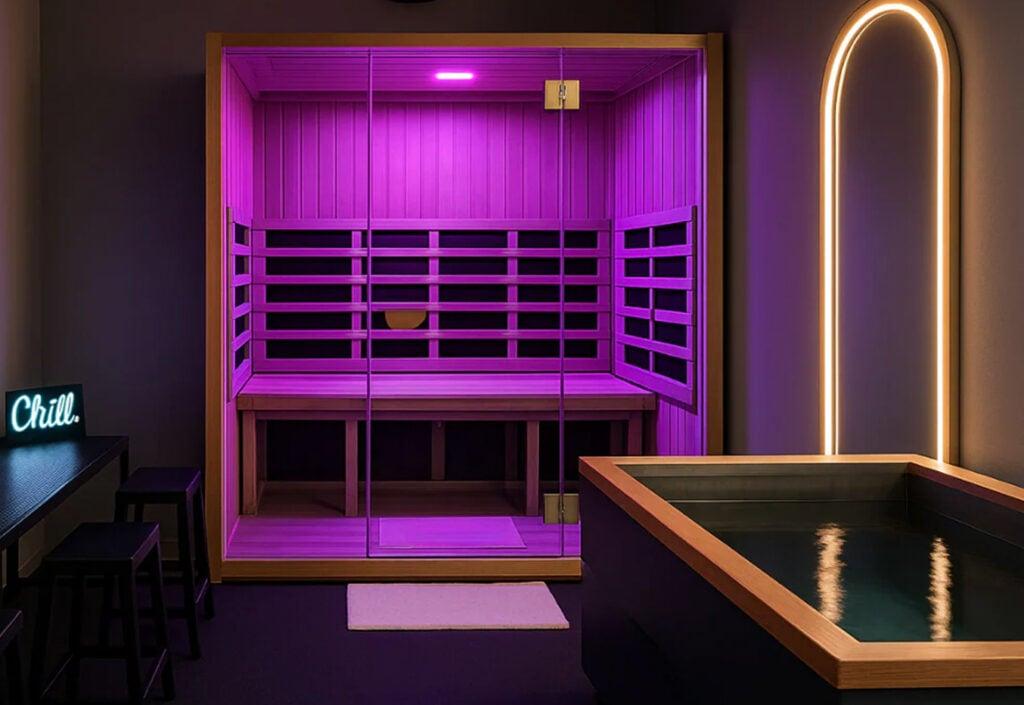
Recovery has gone from the cool-down corner to the star of the show. Studios like Club House in San Diego and Othership in New York City are filling up with people eager to sweat, freeze, and feel amazing afterward. Gyms are catching the wave too—saunas are practically standard, and cold plunges are multiplying fast. Life Time just rolled out 70 of them across the country.
Hotels and spas are chasing the same buzz. Add a plunge pool to a wellness suite and bookings jump. Clearly, people are lining up to get hot, cold, and maybe a little delirious—all in the name of wellness and recovery.
LIT leaned into this shift, expanding from fitness into the recovery space with saunas, cold plunges, and red-light products that look sleek and stand up to daily studio traffic.
“Once we saw how contrast therapy was unlocking real, lasting benefits across all demographics, it was clear this wasn’t a trend to chase, but a future to build,” says Justin Norris, co-founder of LIT.
Why Bother? The Payoffs Are Huge
Ok, so we get the basics – hot, cold, repeat. But what do you actually get out of it? For starters, your circulation gets a workout. Heat opens up blood vessels, cold snaps them shut, and that push-pull flushes out waste while pumping in fresh oxygen. It’s why people swear their muscles feel less sore and bounce back faster. There’s even research showing regular sauna time can cut down your risk of getting sick.
On the brain side, plunging into ice water can flip your mood like a switch. One study scanned people’s brains after a cold plunge and found more activity in networks linked to alertness and positivity after just a few minutes. Better sleep, calmer mood, and glowing skin are kind of the dream combo. Add in red light therapy—built into modern saunas like LIT’s Titan Dual Heat Sauna—and you’ve got collagen support working behind the scenes (science says it can smooth and firm skin).
“What stood out with contrast therapy was how universal the results were, it wasn’t just elite athletes feeling the difference, it was everyday people, parents, and professionals who noticed better energy, deeper sleep, and less pain in their daily lives,” says Norris. “We saw that recovery wasn’t going to stay a ‘nice to have’—it was becoming the foundation of longevity, mental health, and performance.”
How to Try Contrast Therapy
Jumping into contrast therapy doesn’t have to feel like training for the Olympics. The goal is just consistency. “A simple starting routine is 15 minutes in the sauna, followed by 1–2 minutes in the cold plunge,” says Norris. From there, repeat with a 10-minute sauna and push the cold to 2–3 minutes. For women, he often recommends easing in around 57°F to make the practice approachable while still effective.
“The key is to focus on consistency, doing this a few times a week will let you experience the benefits without overthinking it,” he says. “Over time, your body naturally adapts, and you’ll find yourself ready to stay in the cold longer and get even deeper results.”
It’s clear wellness is moving into a new era, one that values recovery as much as the workout itself. And contrast therapy sits at the center of that shift. Yes, it can feel a little ridiculous to roast one minute and freeze the next, but that’s where the balance lives and where the benefits kick in.